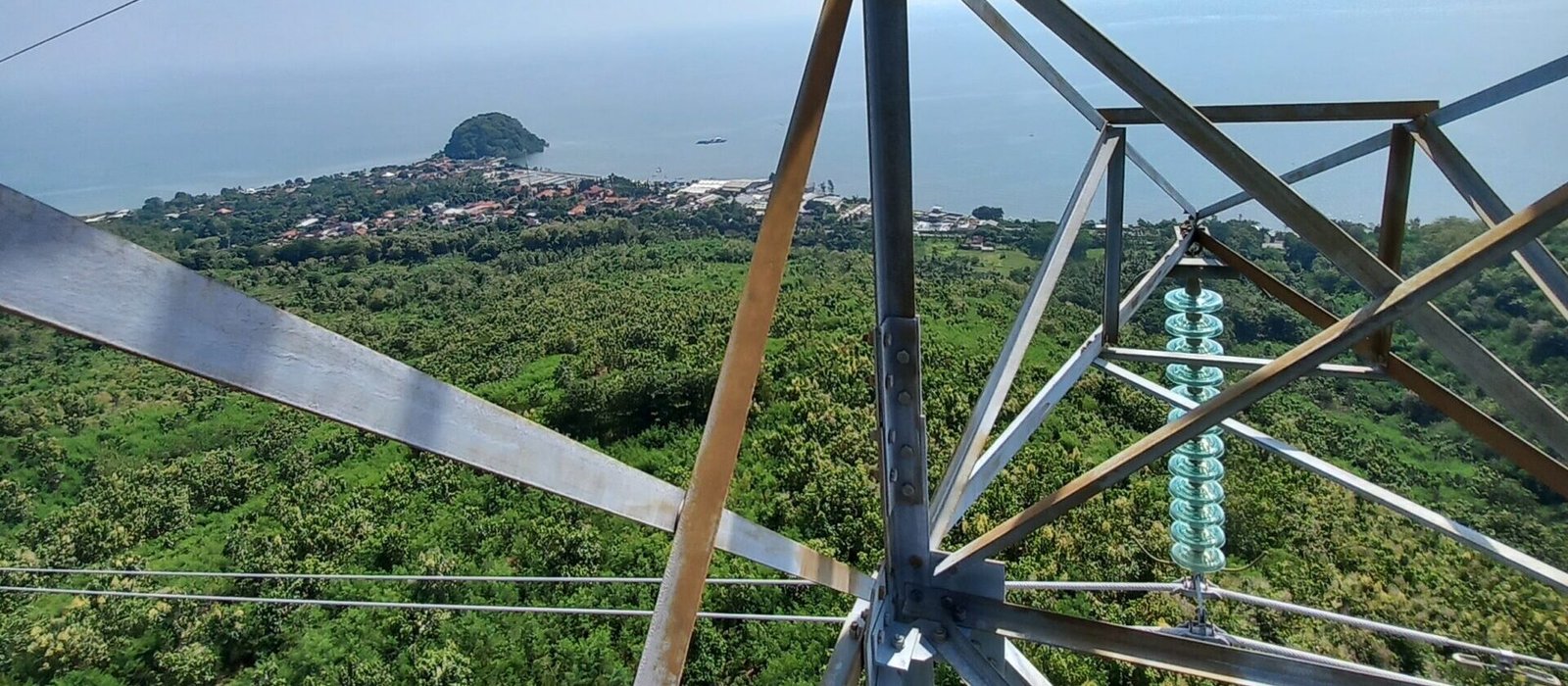
Determining the appropriate placement of Transmission Line Arresters (TLAs) is an important aspect of improving the lightning protection performance of overhead transmission lines. The effectiveness of TLAs depends on several factors, including the number of arresters installed, their configuration, and the characteristics of the transmission line.
According to the simulation results presented in A Practical Evaluation of Surge Arrester Placement for Transmission Line Lightning Protection, installing TLAs on all three phases of a transmission tower can prevent backflashovers when lightning strikes the protected tower.
The study also highlights several important findings:
- Installing TLAs on all three phases can provide protection against the full range of lightning current magnitudes considered in the simulation.
- Installing two surge arresters can provide protection against lightning strokes with a current magnitude of up to 50 kA under the simulated conditions.
- Based on local observations, most lightning-related disturbances occur on transmission towers located at higher altitudes, particularly those with high tower footing resistance.
These findings suggest that the placement and configuration of TLAs should be carefully considered to achieve effective lightning protection.
Effectiveness of Line Surge Arresters Based on CIGRE TB 855
According to CIGRE Technical Brochure 855, Effectiveness of Line Surge Arresters for Lightning Protection of Overhead Transmission Lines, Line Surge Arresters (LSAs), also known as Transmission Line Arresters (TLAs), protect the insulators connected in parallel with them against lightning overvoltages.
In addition to protecting the phases on which they are installed, TLAs can also reduce overvoltages on unprotected phases of the same tower.
1. Lightning Protection Performance with TLA Installation
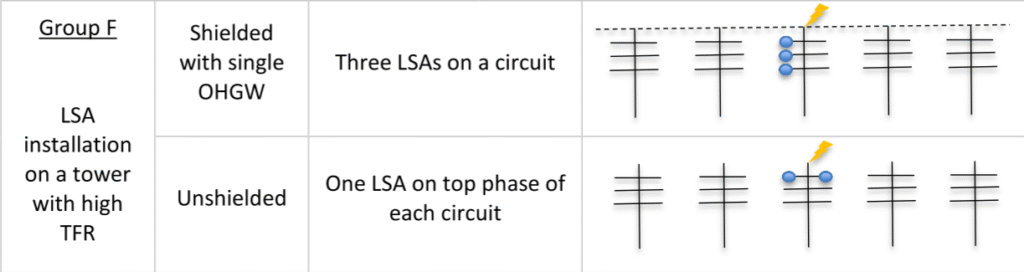
The CIGRE report presents simulation results for transmission lines equipped with TLAs in different installation configurations.
The following figure illustrates the lightning protection performance of a transmission line with TLAs installed along the line.
For comparison, the following figure shows the lightning performance of a transmission line without TLA installation.
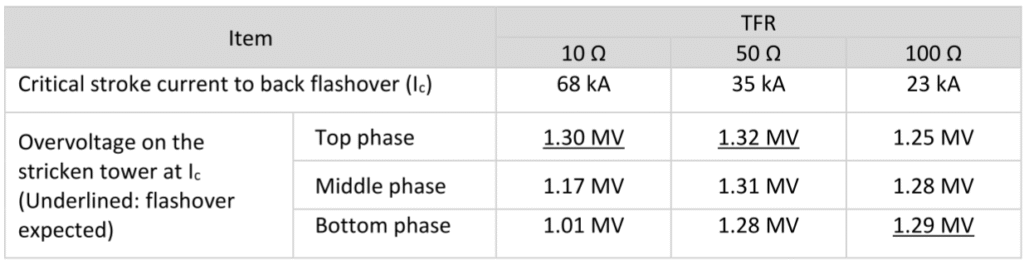
By comparing these configurations, we can better understand how TLA installation influences the lightning protection performance of overhead transmission lines.
2. Comparison of TLA Placement Configurations
The effectiveness of TLA installation also depends on which phases are equipped with surge arresters.
The following figure presents the simulation results for an individual tower with different TLA placement configurations.
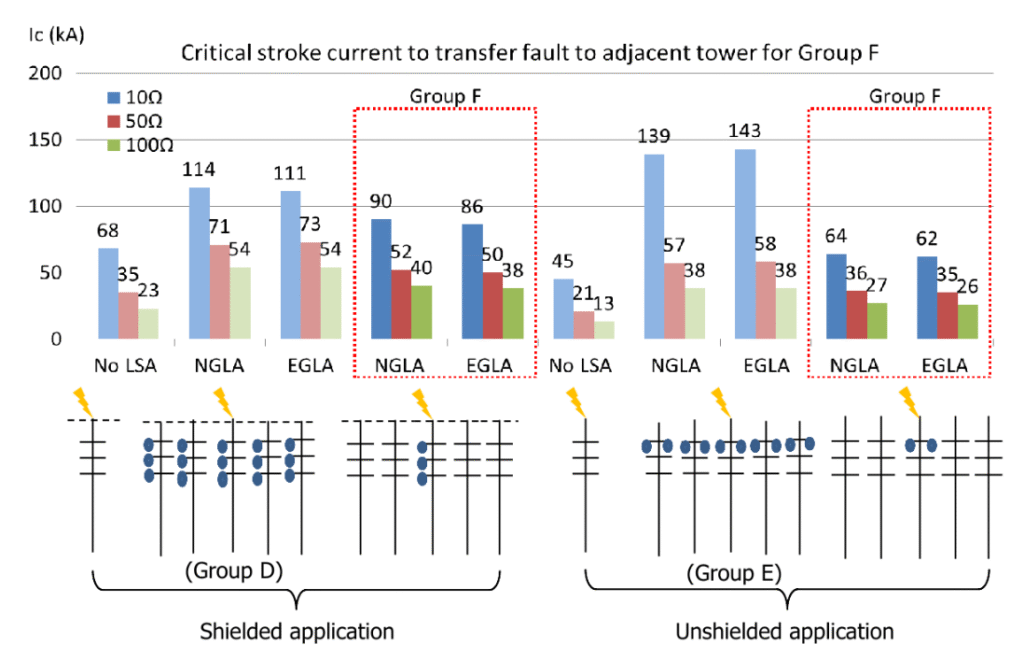
It should be noted that this comparison is not entirely equivalent because the configuration on the right assumes that the transmission line does not have a shield wire.
Nevertheless, the simulation results suggest that installing TLAs on all three phases of one circuit may provide better lightning protection performance than installing TLAs only on the upper phases of both circuits.
This finding highlights the importance of considering the arrangement of surge arresters rather than focusing solely on the number of installed units.
3. TLA Installation on Consecutive Towers
To provide a more consistent comparison, we can also consider TLA installation on consecutive transmission towers.
The following figures illustrate the results for different TLA configurations applied to consecutive towers.
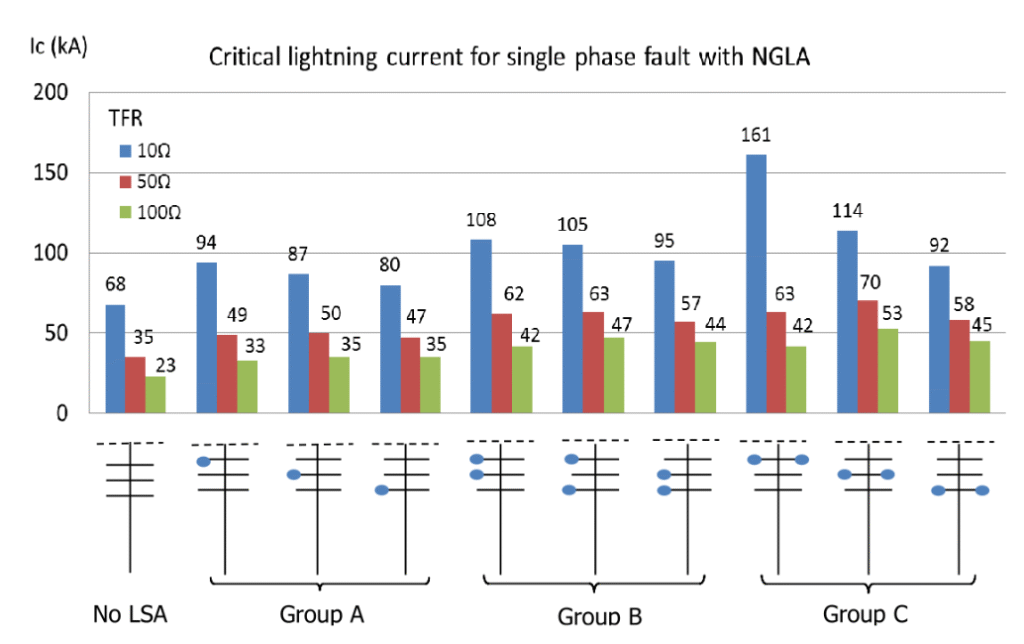
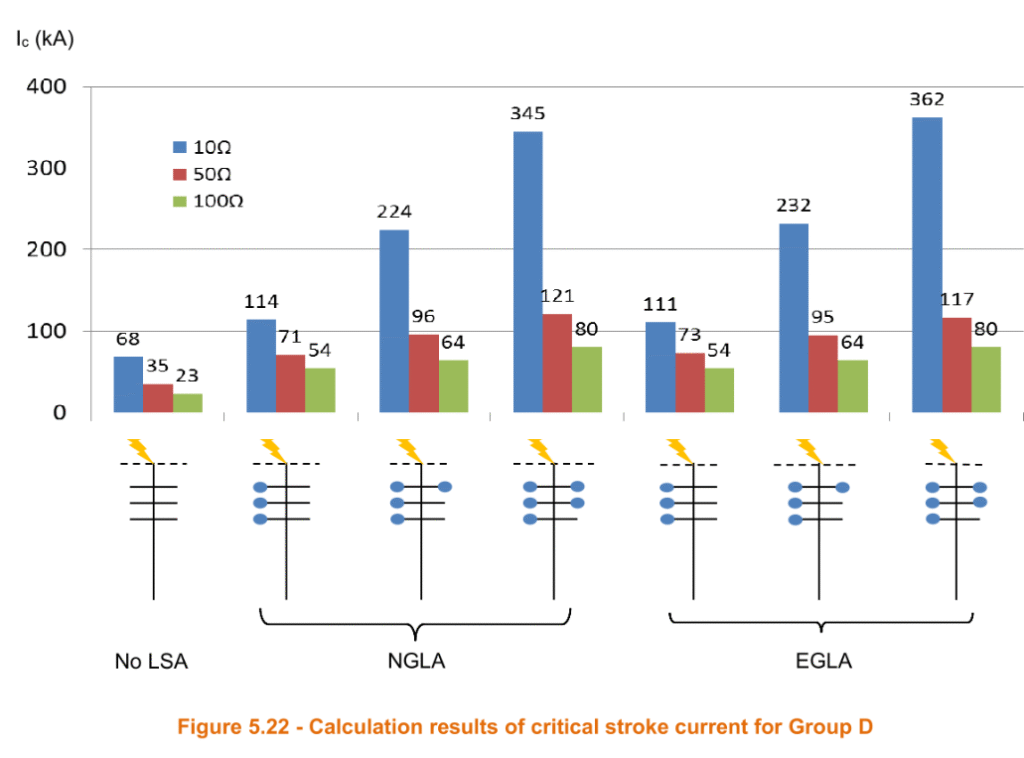
These results can help evaluate how the arrangement of TLAs along a transmission line affects the overall lightning protection performance.
Reported Effectiveness of TLA Installation
CIGRE TB 855 presents operational experience collected from 75 transmission lines equipped with approximately 40,000 line surge arresters.
Based on the reported data, TLA installation achieved an effectiveness of approximately 80%.
This finding indicates that TLAs can significantly improve lightning protection performance. However, their effectiveness may vary depending on several factors, including tower footing resistance, lightning exposure, transmission line configuration, and arrester placement.
Optimizing TLA Investment Based on Protection Performance
The simulation results presented in CIGRE TB 855 indicate that the lightning protection performance of two TLA installation configurations is relatively similar: installing TLAs on all three phases of one circuit (Group D) and installing TLAs on the upper phase of both circuits (Group E).
Although both configurations provide comparable protection performance under the simulated conditions, they require different numbers of surge arresters. Group D requires three arresters per tower, while Group E requires only two.
From an investment perspective, this difference is important. Assuming similar installation costs per arrester, the Group E configuration could be applied to more transmission towers within the same investment budget than Group D.
Therefore, the evaluation should not focus solely on the protection performance of individual towers. It should also consider the overall effectiveness and cost efficiency of TLA installation across a larger transmission network.
Further studies are needed to evaluate the relationship between investment costs and lightning protection performance. A cost-benefit analysis could help determine whether installing fewer arresters on more towers provides better overall protection than installing more arresters on a smaller number of towers.
This approach could support more efficient TLA investment planning, particularly for transmission networks covering large geographical areas or consisting of numerous transmission towers.
Conclusion
The reviewed studies indicate that the placement of Transmission Line Arresters plays an important role in improving the lightning protection performance of overhead transmission lines.
Installing TLAs on all three phases generally provides more comprehensive protection than installing them on selected phases. However, the actual improvement depends on the transmission line configuration, lightning characteristics, and arrester placement.
Furthermore, the effectiveness of TLA installation should be evaluated not only from a technical perspective but also from an economic perspective. A configuration that provides slightly lower protection performance at an individual tower may offer greater overall benefits if it allows more towers to be protected within the same investment budget.
Therefore, selecting the appropriate towers and TLA installation configurations should involve a combination of technical assessment and economic evaluation. Important factors include local lightning exposure, tower footing resistance, expected protection performance, and investment efficiency.
By considering these factors, transmission line operators can develop a more effective and economical TLA installation strategy to improve the overall reliability of their transmission networks.
References
- A Practical Evaluation of Surge Arrester Placement for Transmission Line Lightning Protection.
- CIGRE Technical Brochure 855, Effectiveness of Line Surge Arresters for Lightning Protection of Overhead Transmission Lines.
Get new posts by email
Confirm your address by email. You can unsubscribe from any update.